
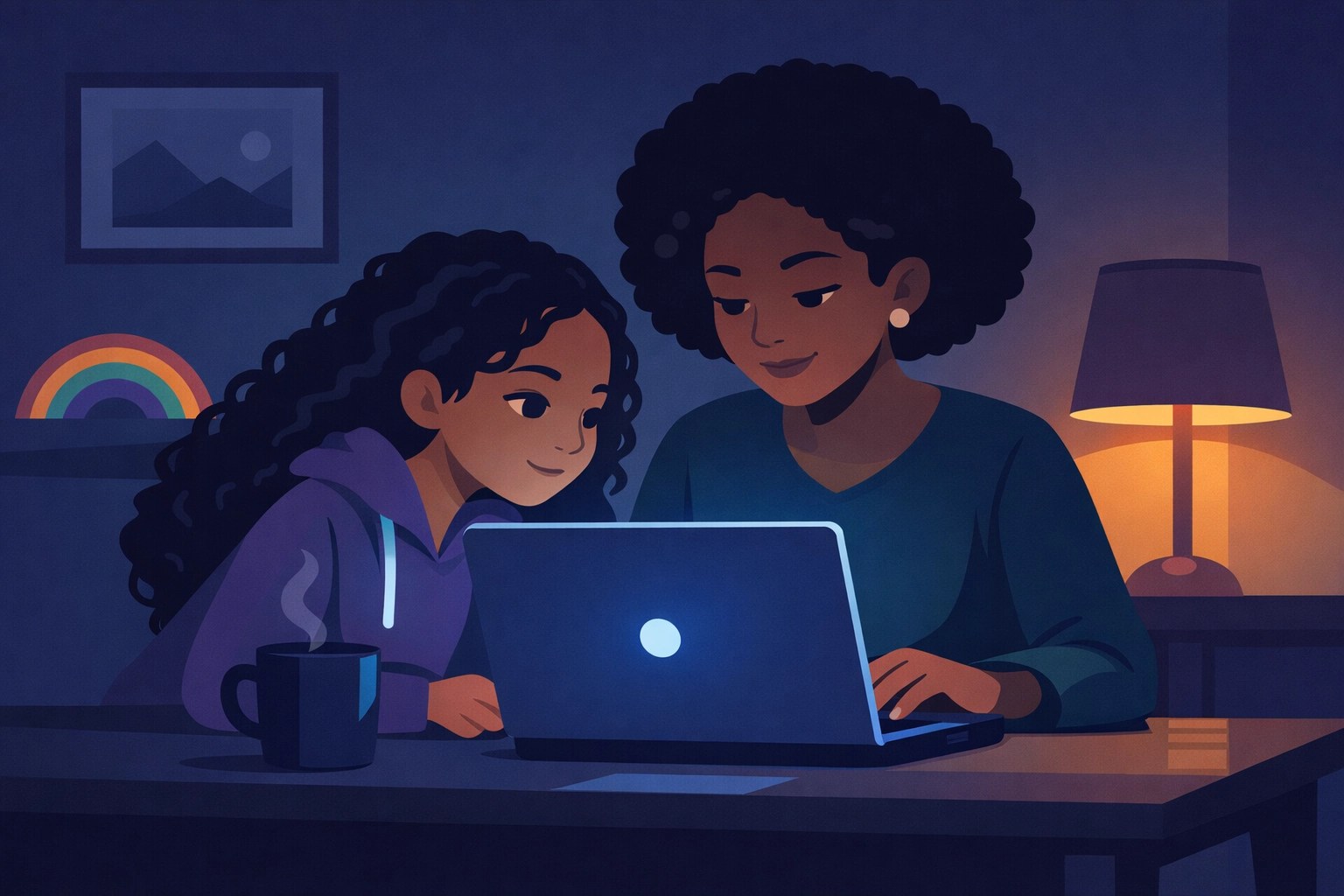
It's 11:47 PM on a Tuesday, and I'm curled up in bed with my laptop glowing in the dark. My family's asleep. The TV is providing some company as the dialogue drones along in my headphones. Then I hear a door slam.
Isabel wanders into the room, climbs into bed, and asks: "Mama, why do you have your computer in bed?"
I scoop her up and tuck her in next to me. How do I explain this to a four-year-old? That my brain is never quiet. That I'm building something I wish existed years ago? That I'm trying to stay relevant in an industry that's changing faster than I can keep up? That I'm doing this for me, but also for every AV tech who's ever felt stuck, underprepared, or left behind?
I tell her I'm building something special. Something creative. Something that might help a lot of people. She quietly says: "That's because you're an engineer." and drifts off to sleep.
I snuggle closer, and continue to work.
The Problem
I've been trying to take AV certification courses for years.
Not because my job required it, my employers never pushed for it. But because I knew that if I wanted to grow, to move up, to keep pace with where this industry is headed, I needed those credentials. I needed to prove I understood the industry standards, the frameworks, the language that separates a technician from an engineer. Did I?
And I’m not new to this. I’ve been in corporate AV for over 12 years, long enough to watch the industry shift eras in real time:
- The “legacy” era where you earned your confidence the hard way: doing the manual math, knowing your cable types and terminations, understanding the physics of the room, and troubleshooting with your ears and a meter.
- The “smart device” era where systems look cleaner and feel easier… until you’re the one chasing an intermittent handshake issue, deciphering network behavior, or supporting gear that updates itself overnight.
Both eras demand real skill. But the learning resources didn’t evolve at the same speed as the job.
But here's the thing: for me the materials never stuck.
I'd read the same chapter three times and retain nothing. I'd watch a video and zone out halfway through. My ADHD brain needs movement, interaction, connection, not static PDFs and lecture-style courses. Add a full-time job, a child, a husband, a house to run, and the idea of carving out focused study time felt impossible.
So I kept putting it off. And the guilt piled up.
The Inquiry
A few years ago, I posted a question in an AV forum:
"How do you continue to grow when you work remotely and not touching systems daily or you are in a corporate environment with legacy equipment, legacy software, and no budget for new gear? How do you keep up with the latest technology when the market and software are evolving faster than we can blink?"
The answers were… disappointing.
The best suggestion? Try a gaming platform. Build virtual systems. Learn by simulation. But in order for you to have that access you had to learn a new platform, design all the elements, build the tool, etc…
I thought, Okay, that's brilliant. Let's do it.
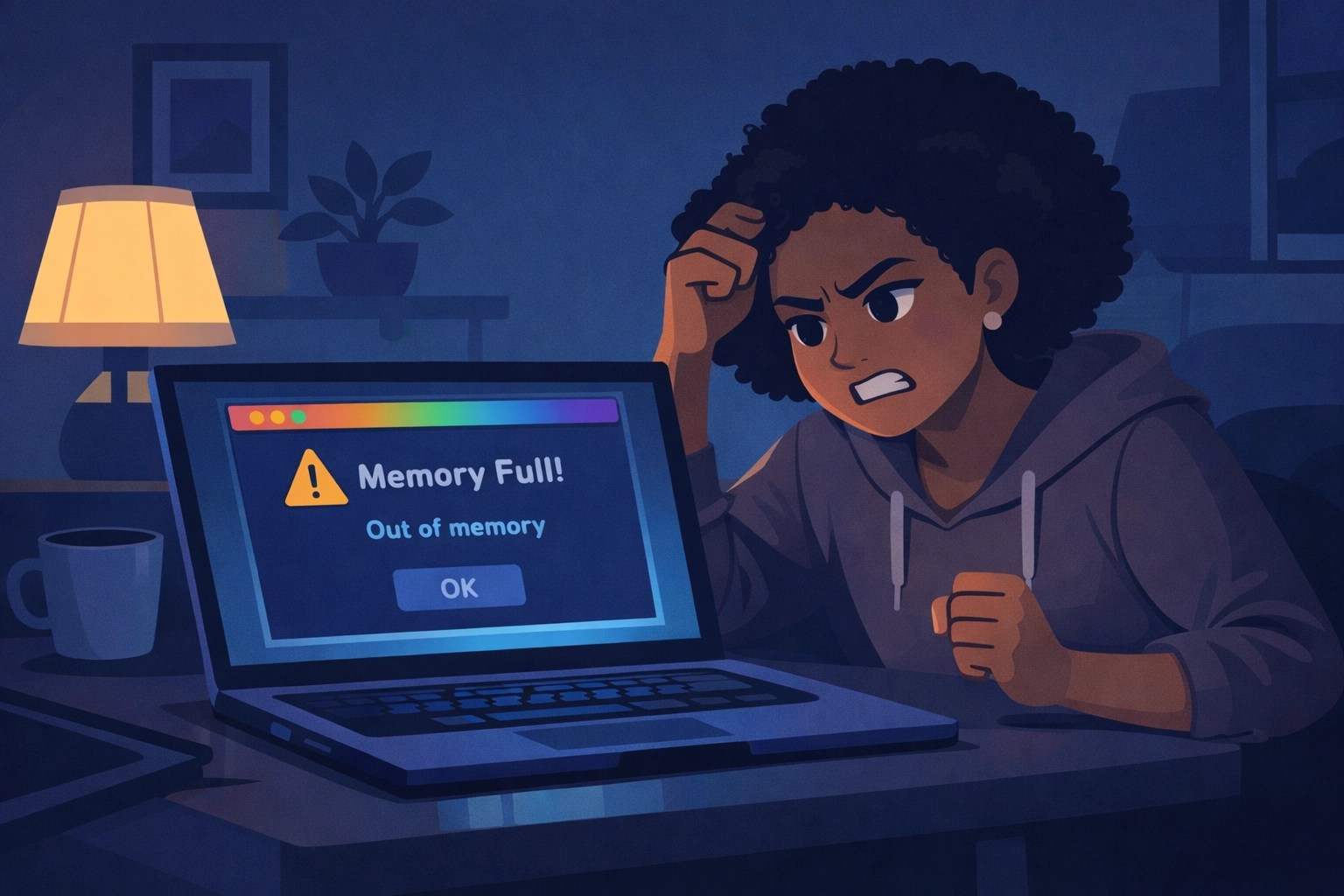
I downloaded the software, and my computer ran out of memory immediately.
I felt stuck. Frustrated. Left behind.
The Realization
The thought had been swirling around for a while.
For all the training platforms that exist online, there are minimal AV options.
You want audio engineering? Sure, there are courses. You want IT? Cybersecurity? Cloud architecture? Take your pick.
But actual AV: the integration, the signal flow, the standards, the design thinking? You've got two options:
- Pay for expensive professional courses
- Rely on manufacturers
- Piece it together yourself from random YouTube videos, manuals, and forum threads.
I was searching for more cohesive options. And I realized I wasn't alone.
Technicians don't always have extra money to drop on certification prep. IT professionals suddenly tasked with AV responsibilities don't have time for week-long boot camps. Veterans like me who just want to refresh or target a specific skill shouldn't have to mortgage their education.
It Started With Flashcards
When I finally committed to aligning my skills with industry standards, I knew I needed something simple. Something I could pull out during lunch breaks, while waiting for my daughter at dance class, or late at night when the house was quiet.
So I thought: Flashcards. Just build some flashcards I can use on my phone.
Easy, right?
Except once I started building, the ideas kept coming.
What if the flashcards were dynamic? What if they adapted to what I was struggling with? What if I could simulate real-world scenarios: like troubleshooting signal loss or designing a matrix switcher setup: without needing an entire rack of gear in my garage?
What if I could train an AI backend on industry standards so it could guide learners through the same frameworks and certification structures we all need to master, but in a way that actually makes sense to me?
And here’s the part I didn’t expect: AI became a thought refinery for me.
I’ve always had a lot of ideas (hello, ADHD brain). The problem wasn’t inspiration—it was translation. I’d have a jumbled mess of concepts, sticky notes, half-written outlines, and mental “what ifs” spinning at the same time. Using AI helped me take that raw, messy input and turn it into a refined plan faster: clearer modules, tighter learning objectives, cleaner user flows, and fewer dead ends. It’s how I moved from “I think this could work” to a full build without getting stuck in the coding weeds every single time.
That's when the project evolved from flashcards into something bigger.

My Creative Hook-in
Before I went all-in on AV, I was a dancer. A choreographer. I spent years building performances, teaching movement, creating something beautiful out of bodies and how we move through space.
When I transitioned fully away from dance, I told myself I was going to focus on one job and on being a mom. But the creative urge is always lingering in the background.
So building AVHD Lab brought it all back.
The ideation. The problem-solving. The late-night breakthroughs. The spark of making something that didn't exist before.
My ADHD brain thrives on this. One idea informs another. Debugging the AI backend leads to a new learning path structure. Refining the simulations sparks a better flashcard design. It's not linear: it's alive.
And for the first time in years, AV felt exciting again. Not just functional. Not just a paycheck. But special.
Who This Is Really For
AVHD Lab started as a tool for me. But the more I built, the more I realized how many people need this.
A Note on Responsible AI (and Respect for Legacy Knowledge)
I’m not interested in chasing shiny tech just because it’s new. I’ve spent real time researching the “why” behind these tools—including the environmental impacts and the cost of running them at scale.
So my stance is simple:
- Use AI where it actually removes friction (study help, tutoring, pattern-spotting, faster iteration)
- Avoid AI where it creates noise or replaces real craft
- Keep the platform grounded in the collective legacy knowledge of this industry—the fundamentals, the field lessons, and the standards that were built long before “smart” devices showed up
AVHD Lab is my way of integrating new tools responsibly while still honoring what experienced AV pros already know.
New technicians entering the field who can't afford certification courses but need to prove they know their stuff.
IT professionals who suddenly find AV dumped on their plate and have no idea where to start.
Veterans like me who work with legacy systems and have no budget for training but refuse to be left behind as AI and automation reshape the industry.
Anyone who just wants to refresh a skill, target a specific topic, or learn at their own pace without expensive gatekeeping.
This is the bridge I had to build because it didn't exist. And now that it's here, I want to share it.

Lessons Learned
When my daughter snuggles up next to me and I'm "still working", I want her to understand:
Your creativity matters. Your hard work matters. And success doesn't always look the way you think it will.
She's watching me build something from scratch. She's seeing that the path isn't linear: that some nights I'm excited, some nights I'm exhausted, but I never sacrifice my time with her. Snuggles and playtime will always take priority, because that is what matters most.
Dreams don't have to come true overnight. But we can build the bridge that gets us there.
And if we're lucky, that bridge helps other people too.
______________________________________________
Welcome to AVHD Lab. If you test it out and share your notes in the Feedback section, I’ll genuinely appreciate it—and I’ll put that feedback to work.
Leave a Reply