
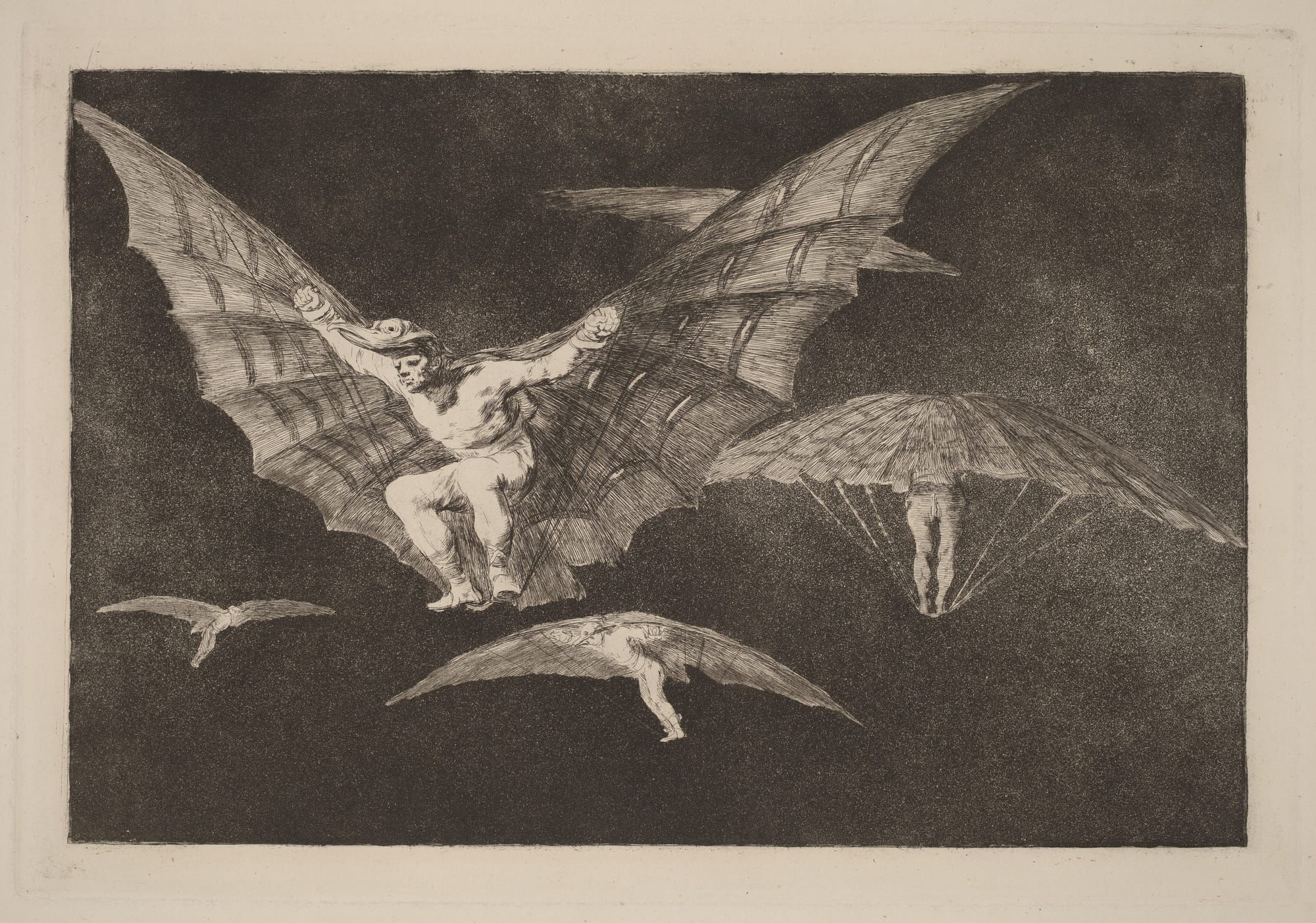
Permission to be more ambitious, with AI and with myself
There is so much happening in AI at any given moment of the day. It is near impossible to keep up with all the new tools, newsletters, YouTube content creators, wondering if these tools will actually kill us while our employers mandate that we only use these tools, and so on and so forth. For a few days, I tried to read this article that was part of the barrage of information. I would open the tab, get a few paragraphs in, and my brain would wander off somewhere else entirely, the way it does when it decides something isn’t going to hold its attention. Yay ADHD!! So I stopped fighting it and let the computer read it to me. Yay Tools.
Anyway, I’m really glad I did.
The article is “How to be more ambitious: A tutorial for humans with models” by Felix Rieseberg, who works on Claude at Anthropic and has led engineering for Claude.ai, Cowork, and Claude’s desktop app. I went in expecting a smart piece about prompting. I came out of it feeling something I hadn’t felt in a while, which was excited. Not excited about a new feature or a faster workflow, but excited about what I might be willing to try next.
The Problem With “Be More Ambitious”
Felix opens by naming something a lot of us feel. People who build AI keep telling the rest of us to be more ambitious with it, and it has turned into a kind of rallying cry. He acknowledges that it is genuinely hard advice to follow, because nobody tells you what “more ambitious” actually looks like on a Tuesday afternoon with a deadline. So he wrote a tutorial.
He breaks ambition into four types:
- Speed: the same work in less time. He skips this one, because most of us have already found it.
- Altitude: stepping up from the task to the outcome. Instead of asking for the next fix, ask what you actually want to happen next.
- Depth: working the way a field-leading expert would, with their tools, their raw material, and their standards.
- Range: pulling in fields the task doesn’t obviously need, because that is often where the most interesting results come from.
What Changed in How I Prompted This Week
A few of his techniques rearranged how I think about working with these models.
Ask for the goal beyond the goal. He describes moving from asking Claude to fix individual crashes to asking it to keep his apps crash-free. That is a different kind of request entirely, and it meant first building the environment that let the model actually own the outcome.
Ask for depth, not size. He points out that when you tell a model to act like a professional, it often changes its vocabulary without changing its methods. The fix is to insist on the instruments the best people in the field actually use, and to set goals that sound unreasonable, then tell the model they are perfectly reasonable.
Do not let the model grade its own homework. His advice is to insist on outside validation, ideally a tool the model can run to check its own result. After 14 years in AV, where “it worked in the test room” and “it works in the boardroom at 8:59 AM” are two very different claims, this one landed hard.
Turn nouns into verbs. Borrowed from The Art of Innovation: a deliverable isn’t a thing, it’s an outcome you are trying to cause. Once you name the verb, it becomes much easier to see which other fields might have something to contribute. He is careful to separate this from role play. You don’t ask the model to sound like a specialist, you ask it to do what that specialist does.
Okay. I have been asking for nouns.
The Part That Wasn’t About Work
Felix starts with work, and the business examples are useful. But the section that lit the fire for me came at the end, where he explains why any of this is necessary in the first place.
His argument is that people have always been held back by what they believe is possible, and that we tend to trust ourselves only inside very narrow lanes. He uses Michelangelo as the example: a sculptor who did not want to paint the Sistine Chapel, because he was not a painter. Not to compare myself to Michelangelo, but this is certainly true for me, and what I trust that I know.
I felt that one. I came to AV from the stage, from dance and choreography and front and back of house theater, and for a long time I filed those as two separate versions of me. The creative one and the corporate one. One that builds movement, and one that builds systems.
He names the psychology behind this, self-efficacy, the idea that people who believe in their own abilities tend to accomplish more. And he points to ways people have historically pushed past it: believing a hard thing is possible before anyone tells you it isn’t, watching someone else do it first, and giving yourself permission to fail.
That last one is the one I needed… I miss my 19-year-old fearless self.
Letting the Tool Help Where I Don’t Have It
Here is what I took away, and it goes well beyond prompting.
I don’t have to stay in the lane I was trained for. Not that I have over the years. I can step outside a career trajectory that looked linear on paper. I can keep being myself, keep being creative, and lean into whatever is next, even when I don’t yet have every skill it requires.
That is where AI fits for me. Not as a replacement for creative thinking, and not as a way to take people out of the room, but as the bridge across the gaps I don’t have yet. The thing that shortens the distance between thought and execution, so the ideas sitting in the notebook get a real chance to become something. And I have MANY random notebooks.
The model can bring the range. I still bring the vision, the taste, and the reasons it matters.
Dare
I don’t know exactly what it was about this article that broke through. I had been struggling before I pressed play. What I know is that I finished it wanting to try something bigger than I would have tried last week.
So this is the start of something I am calling Go Deeper, a build-in-public series about how I use AI in my own projects, and an invitation for you to push one step past what you think is possible, too.
The first tool in the series is the Ambition Prompt Book: sixteen prompts I adapted from Felix’s tutorial, sorted by how you feel right now instead of by theory. Every entry lives on the Go Deeper page.
If you have been reading about AI and feeling more overwhelmed than inspired, start with Felix’s tutorial. Let it read to you if you need to. Then pick one thing you have been told, or told yourself, is outside your lane.
And try anyway.
Read the original: How to be more ambitious: A tutorial for humans with models by Felix Rieseberg. The title of this post borrows from the image he chose for his: Francisco Goya’s “Modo de volar” (A Way of Flying).
Leave a Reply